Your Event & I!
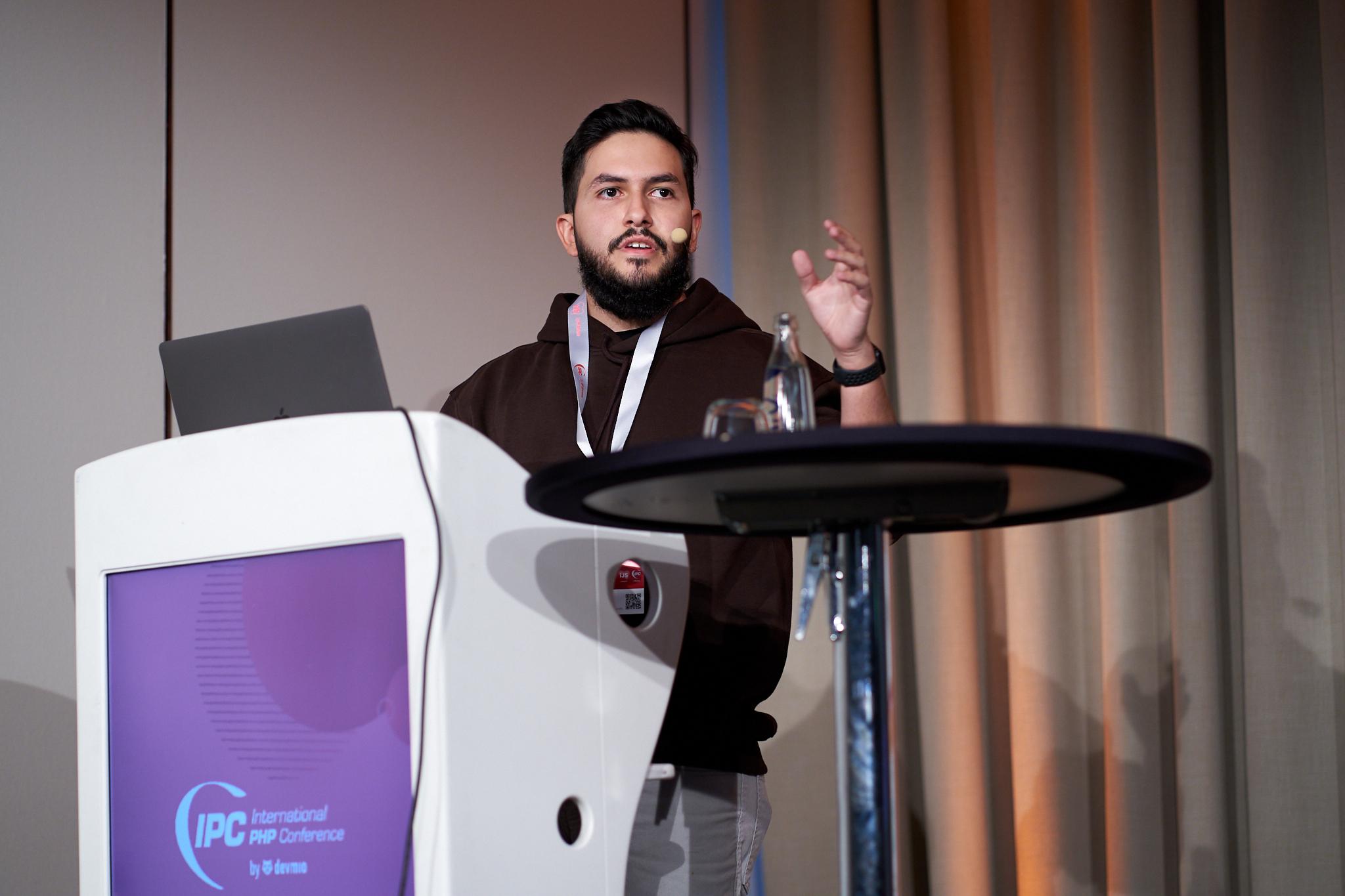
Hi! Interested in having me speak at your event?
First of all, thanks for looking at my speaker rider and for your interest in inviting me to speak at your conference! I take it as a great honor!
Second, I'd love to hear from you!
Here are just a few things I hope conference organizers take into account during planning, preparation, and execution of conferences I speak at. I hope none of it is shocking, and that it's all reasonable for you.
Accommodation and Travel
The speaker should bear no part of the cost of speaking at your event. You should cover at least:
- My ticket to the event.
- Lodgings in an Airbnb or hotel near the venue, the nights before and after the event;
- Travel to and from the event, such as flights or trains.
Fees and Honorariums
Regular Sessions
Since speaking at events helps me promote myself, I do not generally require a speaking fee or an honorarium. This is especially true for non-profits, community events, or events where the cost of attending is heavily reduced.
For large-scale corporate events where the organizing company stands to make a profit or private internal corporate events, my fee is negotiable based on the size of the event and whether I am a keynote speaker.
Workshops
I lean toward a revenue-share model rather than a flat fee. That's usually 60% of post-expenses revenue or 40% of pre-expenses revenue. Adaptations are possible, and in the past, I’ve also agreed to a 50% share of profits.
I find this approach fair for both sides, especially given how much ticket prices can vary across batches. A percentage model adapts to those changes naturally and aligns incentives without forcing either party into uncomfortable risk.
When reaching out, here are some points to help us better align expectations:
- What duration do you expect for the workshop?
- What are your estimates or expectations for ticket sales—roughly how many attendees, and at what price points / ticket-batches (early-bird, regular, late)?
- Do you happen to have dealbreaker requirements regarding format and methodology? e.g., strictly lecture, hands-on coding exercises, live code reviews, Q&A, group work, etc.?
Overall, if you prefer a fixed-fee model, I’m open to discussing what would make sense under that scheme as well—it all depends on what's more comfortable for both sides, and also your input on the questions above.
Accessibility
If the event is in-person, all areas-including any auxiliary events like official afterparties or co-located events—must be accessible to those who require mobility aids, including stages. They should adhere to at least the hosting country's equivalent of ADA standards.
What I Speak About
️Active Sessions
These are talks I'm currently delivering and are available to be presented at your event!